Hybrid Electric Vehicle Market Size, Growth, and Forecast 2025-2033
Market Overview:
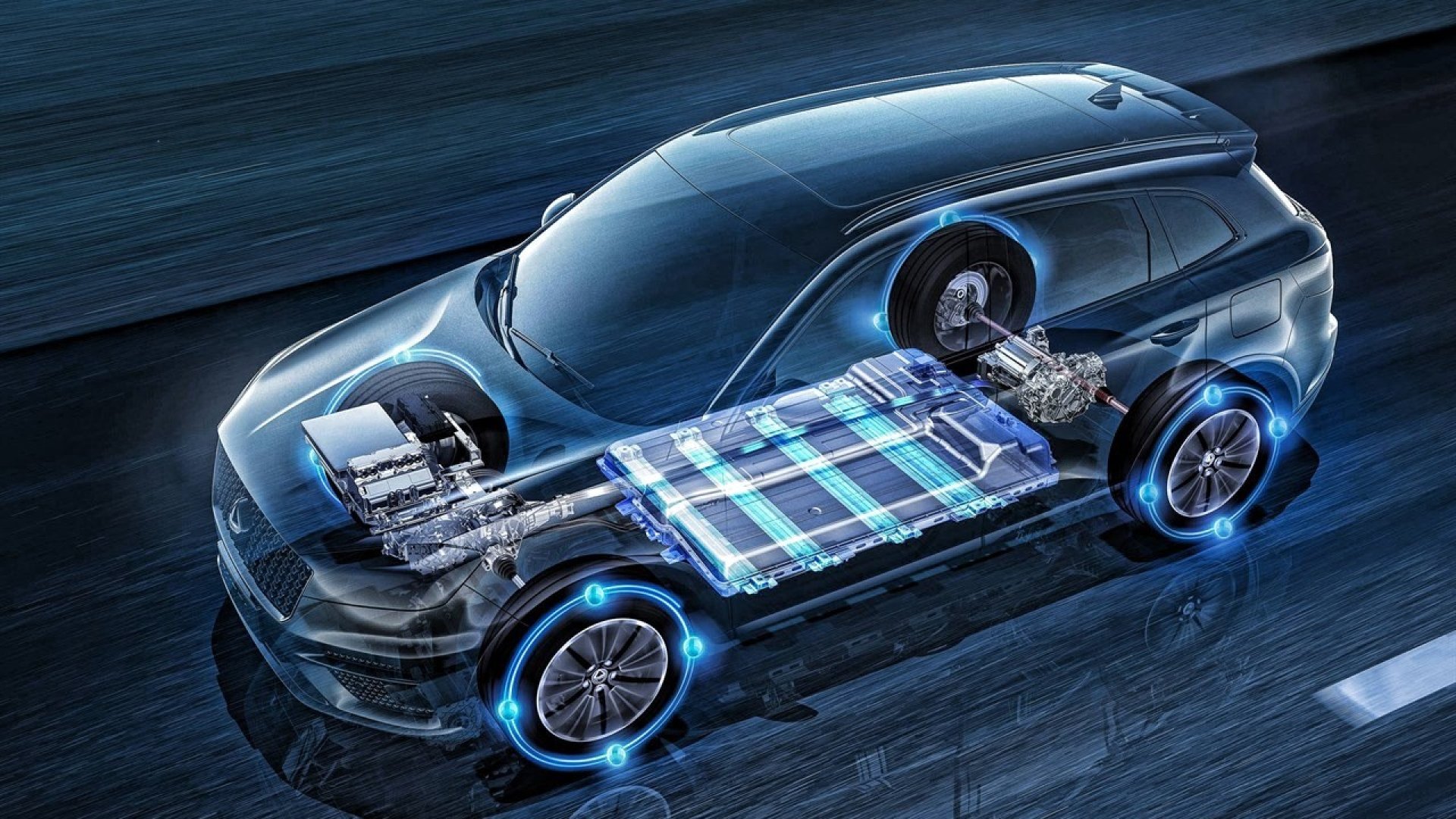
The hybrid electric vehicle market is experiencing rapid growth, driven by stringent global emission standards and policy mandates, rapid advancements in battery and powertrain efficiency, and rising consumer demand for fuel economy and range security. According to IMARC Group's latest research publication, "Hybrid Electric Vehicle Market Size, Share, Trends and Forecast by Propulsion Type, Configuration Type, Vehicle Type, Power Source, and Region, 2025-2033", the global hybrid electric vehicle market size was valued at 12.93 Million Units in 2024. Looking forward, IMARC Group estimates the market to reach 104.43 Million Units by 2033, exhibiting a CAGR of 25.78% from 2025-2033.
This detailed analysis primarily encompasses industry size, business trends, market share, key growth factors, and regional forecasts. The report offers a comprehensive overview and integrates research findings, market assessments, and data from different sources. It also includes pivotal market dynamics like drivers and challenges, while also highlighting growth opportunities, financial insights, technological improvements, emerging trends, and innovations. Besides this, the report provides regional market evaluation, along with a competitive landscape analysis.
Download a sample PDF of this report: https://www.imarcgroup.com/hybrid-electric-vehicle-market/requestsample
Our report includes:
- Market Dynamics
- Market Trends and Market Outlook
- Competitive Analysis
- Industry Segmentation
- Strategic Recommendations
Growth Factors in the Hybrid Electric Vehicle Market
- Stringent Global Emission Standards and Policy Mandates
Governmental regulations aimed at decarbonizing the transport sector serve as a primary catalyst for the hybrid electric vehicle (HEV) market. In early 2026, the European Union has seen a significant shift in its automotive landscape, with hybrid-electric registrations capturing 38.6% of the market share. This surge is largely driven by tightening CO2 compliance requirements and the phased implementation of Euro 7 standards, which force manufacturers to reduce fleet-wide emissions. Furthermore, India’s PM E-DRIVE scheme, active through March 2026 with an outlay of ₹10,900 crore, specifically incentivizes the production and adoption of hybrid and electric models. These mandates effectively penalize high-emission internal combustion engines, making hybrid powertrains the most viable near-term solution for automakers to avoid heavy fines while meeting consumer demand for performance. By bridging the gap between traditional fuel and pure electric power, these policies ensure that hybrids remain a central pillar of national green mobility strategies.
- Rapid Advancements in Battery and Powertrain Efficiency
Technological innovation in energy storage and power delivery is fundamentally lowering the barriers to hybrid adoption. In 2026, battery manufacturing capacity has exceeded 3 TWh globally, leading to a significant reduction in component costs. Battery prices have fallen to approximately $80 per kWh, a threshold that makes hybrid vehicles increasingly cost-competitive with conventional gasoline cars even without external subsidies. Industry leaders like Toyota and Hyundai are now deploying advanced parallel-series hybrid systems, which account for nearly 70% of new hybrid registrations. These systems utilize larger, more efficient battery packs and sophisticated energy management software to optimize fuel consumption in stop-and-go urban environments. Additionally, the development of solid-state battery prototypes and improved lithium-ion chemistries has enhanced thermal stability and energy density. These engineering breakthroughs allow for longer electric-only ranges and faster regenerative braking cycles, directly addressing consumer concerns regarding vehicle longevity and operational efficiency.
- Rising Consumer Demand for Fuel Economy and Range Security
Economic volatility and the fluctuating price of crude oil have intensified the consumer focus on fuel-efficient transportation. Hybrid electric vehicles offer a compelling value proposition by providing the high power and extended range of traditional engines alongside the cost savings of electric motors. In the United States, hybrid sales recently witnessed a 53% increase as buyers sought to mitigate fuel price spikes without facing the "range anxiety" often associated with limited charging infrastructure. Data from early 2026 indicates that passenger cars represent over 82% of the hybrid market, reflecting a massive shift in household purchasing behavior. Consumers are increasingly viewing hybrids as a "lifestyle statement" of progress that balances environmental responsibility with practical daily utility. This demand is further supported by the proliferation of diverse models, from affordable mild-hybrids to premium plug-in versions, ensuring that there is a hybrid solution available for every economic segment.
Key Trends in the Hybrid Electric Vehicle Market
- The Emergence of Extended Range Electric Vehicles (EREVs)
A prominent trend in 2026 is the rapid rise of Extended Range Electric Vehicles, particularly within the Chinese and European markets. Unlike traditional hybrids, EREVs use a series configuration where the internal combustion engine acts solely as an on-board generator to charge the battery, rather than powering the wheels directly. In China, EREV sales have grown sixfold recently, now accounting for 10% of the New Energy Vehicle market. This technology is gaining traction because it offers the smooth driving experience of a pure electric vehicle while providing a total range that can exceed 1,000 kilometers. Real-world applications include large SUVs and commercial vans where battery-only weight would be prohibitive. By decoupling the engine from the drivetrain, manufacturers can use smaller, more efficient motors optimized for constant-speed power generation, making EREVs a preferred choice for long-distance travelers in regions where high-speed charging networks are still under development.
- Integration of Solar-Augmented Charging Systems
The convergence of photovoltaic technology and automotive design has led to the commercialization of solar-integrated hybrid vehicles. In 2026, several mainstream models are being equipped with high-efficiency solar roof panels that harvest energy directly from the sun to power auxiliary systems or trickle-charge the main traction battery. This trend is particularly evident in the "solar vehicle" segment, which has expanded nearly 18 times in value over the past few years. For instance, integrated solar panels can provide enough auxiliary power to run climate control systems or add up to 20 kilometers of daily driving range without any external plug-in. This real-world application reduces the overall load on the vehicle’s alternator and improves total system efficiency. As solar cell efficiency improves and costs decline, this "self-charging" capability is becoming a standard feature in premium hybrid models, appealing to eco-conscious buyers looking for maximum energy independence.
- Fleet-Driven Electrification and "Depot Point" Operations
The hybrid market is shifting from a retail-dominated sector to one supported by large-scale commercial fleets. In 2026, fleet-driven electrification has become the "structural backbone" of the industry, with companies across North America and Europe transitioning their logistics and service vehicles to hybrid platforms. A key development is the "Depot Point Operator" model, where infrastructure is shared across multiple corporate fleets to lower charging and maintenance costs. For example, local governments in regions like the UK and India are deploying thousands of hybrid-electric buses to meet urban sustainability goals while ensuring service continuity during power grid constraints. This trend is supported by advanced telematics and battery management systems that allow fleet managers to monitor fuel savings and battery health in real-time. The commercial logic is clear: hybrids provide the necessary reliability for 24/7 operations while significantly cutting operational expenditure and carbon footprints.
Leading Companies Operating in the Hybrid Electric Vehicle Industry:
- Toyota Motor Corporation
- Honda Motor Co. Ltd.
- Ford Motor Company
- Volkswagen Aktiengesellschaft
- General Motors Company
- Hyundai Motor Company
- Nissan Motor Corporation Ltd.
Hybrid Electric Vehicle Market Report Segmentation:
By Propulsion Type:
- Full Hybrids
- Mild Hybrids
- Plug-in Hybrids
- Others
Plug-in Hybrids lead the market with 29.7% share in 2024, offering longer electric-only ranges and appealing to eco-conscious consumers due to environmental concerns and government incentives.
By Configuration Type:
- Series HEV
- Parallel HEV
- Combination HEV
Parallel HEVs dominate the market in 2024 due to their efficient design that optimizes fuel efficiency and power output, making them attractive for both consumers and manufacturers.
By Vehicle Type:
- Passenger Cars
- Commercial Vehicles
- Two-Wheelers
- Others
Passenger Cars represent 85.7% of the market in 2024, driven by consumer demand for fuel-efficient and environmentally-friendly options, supported by advancements in battery technology and government incentives.
By Power Source:
- Stored Electricity
- On Board Electric Generator
Stored Electricity holds a 70.0% market share, enhancing fuel efficiency and reducing emissions by efficiently utilizing battery power replenished through regenerative braking and the internal combustion engine.
Regional Insights:
- North America (United States, Canada)
- Asia Pacific (China, Japan, India, South Korea, Australia, Indonesia, Others)
- Europe (Germany, France, United Kingdom, Italy, Spain, Russia, Others)
- Latin America (Brazil, Mexico, Others)
- Middle East and Africa
North America captures over 40.9% market share in 2024, fueled by strong consumer demand, government incentives, and a robust charging infrastructure, with the U.S. leading in PHEV and HEV production.
Note: If you require specific details, data, or insights that are not currently included in the scope of this report, we are happy to accommodate your request. As part of our customization service, we will gather and provide the additional information you need, tailored to your specific requirements. Please let us know your exact needs, and we will ensure the report is updated accordingly to meet your expectations.
About Us:
IMARC Group is a global management consulting firm that helps the world’s most ambitious changemakers to create a lasting impact. The company provide a comprehensive suite of market entry and expansion services. IMARC offerings include thorough market assessment, feasibility studies, company incorporation assistance, factory setup support, regulatory approvals and licensing navigation, branding, marketing and sales strategies, competitive landscape and benchmarking analyses, pricing and cost research, and procurement research.
Contact Us:
IMARC Group
134 N 4th St. Brooklyn, NY 11249, USA
Email: sales@imarcgroup.com
Tel No:(D) +91 120 433 0800
United States: +1-201971-6302
